Hemp Flower, Hemp Seed, and Hemp Fiber: What’s the Difference?
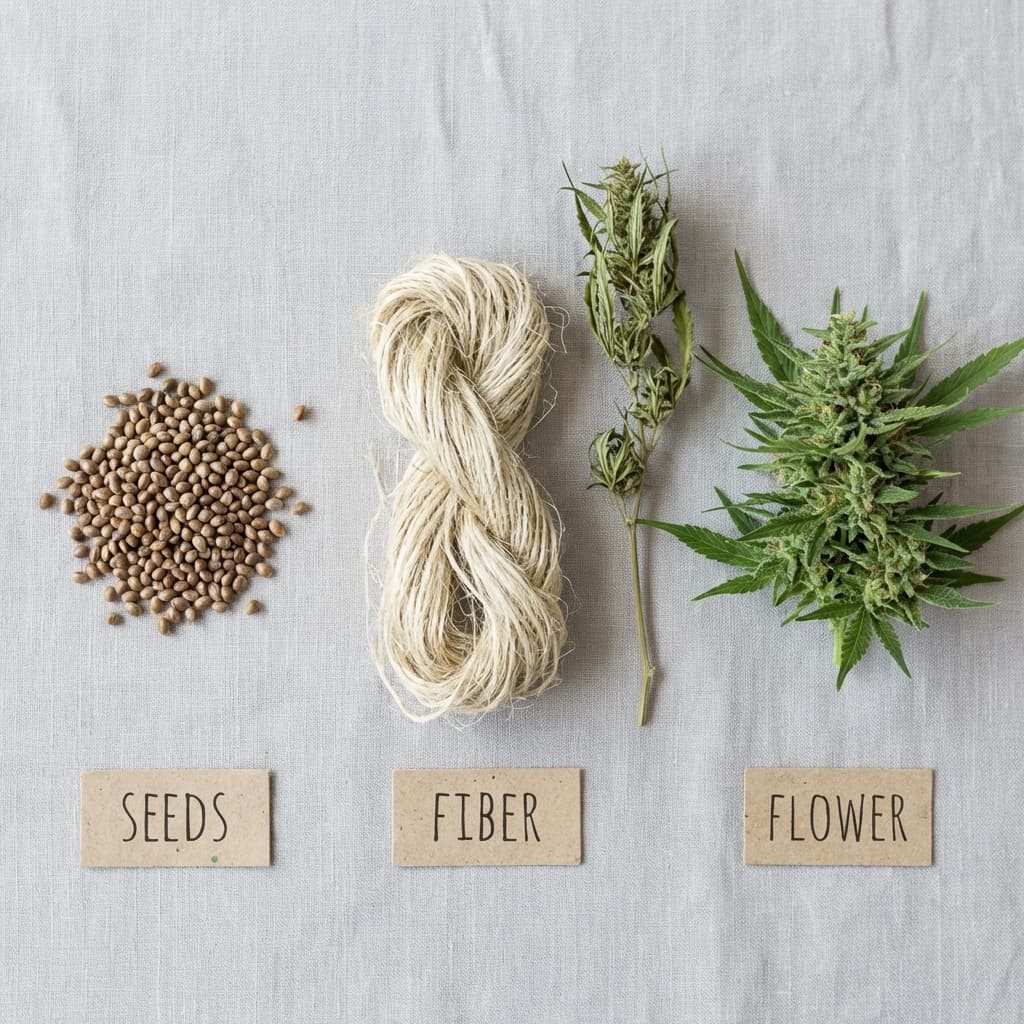
Hemp is often misunderstood as a single product, but it is effectively three different crops rolled into one. Depending on the genetics and cultivation method, a hemp plant can be grown for its medicinal flower, its nutritious grain (seed), or its industrial stalk (fiber).
Understanding these distinct parts is critical for consumers. It ensures you know the difference between a bottle of salad dressing (hemp seed oil) and a wellness tincture (CBD oil).
Key Takeaways
- The Flower is the source of cannabinoids (CBD, THC) and terpenes. This is where the medicinal value lies.
- The Seed is a superfood rich in protein and Omega fatty acids. It contains zero CBD.
- The Fiber comes from the stalk and is used for textiles, construction (hempcrete), and bioplastics.
- Know Your Label: "Hemp Seed Oil" is for cooking; "Hemp Extract" or "CBD Oil" is for wellness.
1. Hemp Flower: The Source of Wellness
When we talk about CBD, we are talking about the flower. The female hemp plant produces resinous buds covered in microscopic, mushroom-shaped glands called trichomes. These trichomes are the chemical factories of the plant.
What It Contains
The resin inside the flower contains:
- Cannabinoids: The active compounds like CBD (Cannabidiol), CBG (Cannabigerol), and trace amounts of THC (Tetrahydrocannabinol, legal limit <0.3%).
- Terpenes: Aromatic oils that give the plant its distinct smell (pine, citrus, earth) and contribute to the "Entourage Effect," enhancing the therapeutic benefits.
Cultivation & Harvest
Growing hemp for flower is more like growing wine grapes than corn. It requires careful attention. Farmers must ensure only female plants are grown because pollination causes the plant to stop producing resin and start producing seeds—which lowers the CBD quality.
The flowers are harvested by hand or specialized machinery, then carefully dried and cured to preserve the delicate terpenes before extraction.
2. Hemp Seed: The Superfood Grain
While the flower feeds the endocannabinoid system, the seed feeds the body. Hemp seeds (often called hemp grain) are strictly a food source and are considered one of nature’s most perfect proteins.
Nutritional Powerhouse
Hemp seeds are distinct because they contain:
- Complete Protein: All 9 essential amino acids, making it a rare plant-based complete protein.
- Perfect Omega Ratio: An ideal 3:1 ratio of Omega-6 to Omega-3 fatty acids, which is crucial for fighting inflammation.
- Fiber: High in both soluble and insoluble fiber (if the shell is intact).
Hemp Hearts vs. Hemp Seed Oil
- Hemp Hearts: These are shelled hemp seeds. They are soft, nutty, and great for salads or smoothies.
- Hemp Seed Oil: This is cold-pressed from the raw seeds. It is green, nutty, and excellent for salad dressings. Crucial Note: Hemp seed oil contains no cannabinoids. If you buy a product on Amazon labeled "Hemp Oil 50,000mg" and it’s cheap, check the ingredients. If it says "Cannabis Sativa Seed Oil," it’s just expensive salad dressing, not CBD.
3. Hemp Fiber: The Industrial Workhorse
If the flower is the medicine and the seed is the food, the stalk is the shelter and clothing. For thousands of years, hemp stalk was the primary reason humans grew the plant.
The stalk consists of two parts:
- Bast Fiber (Outer Bark): Long, stringy, and incredibly strong. It is used for textiles (canvas, linen-like clothing), rope, and insulation. It is antimicrobial and more durable than cotton.
- Hurd (Inner Woody Core): The short, woody chunks inside the stalk. This part is highly absorbent and rich in cellulose. It is used for animal bedding, bioplastics, and Hempcrete—a carbon-negative building material that is fire-resistant and breathable.
Sustainability
Growing hemp for fiber is regenerative. The plants grow tall (6–12 feet) and dense, shading out weeds without herbicides. Their deep taproots aerate the soil, and they sequester massive amounts of CO2—more than most forests per acre.
Summary Comparison
| Part | Primary Value | Common Products | Psychoactive? |
|---|---|---|---|
| Flower | Cannabinoids (CBD) | Tinctures, Topicals, Vapes | No (<0.3% THC) |
| Seed | Nutrition (Omegas) | Hemp Hearts, Seed Oil, Protein Powder | No |
| Stalk (Fiber) | Strength & Cellulose | T-shirts, Paper, Hempcrete, Rope | No |
Frequently Asked Questions
Does hemp seed oil contain any CBD?
No. Hemp seed oil is pressed strictly from the seeds. While nutritious, it contains zero cannabinoids. If you are looking for relief from stress or discomfort, you need a product derived from the flower (often labeled as Full Spectrum Hemp Extract).
Can I smoke hemp leaves or stalks?
You theoretically could, but it would be unpleasant and ineffective. The leaves contain very little CBD, and the stalks contain none (and would taste like burning wood). The medicinal value is concentrated almost entirely in the unpollinated female flower.
Why do some CBD products say "Aerial Parts"?
"Aerial parts" refers to everything above the ground—flower, leaves, and stalk combined. While legitimate, premium products usually focus on the flower because that is where the potency is. Including too much stalk and leaf is often a sign of a cheaper, lower-quality biomass extraction.
Is hemp fiber legal everywhere?
In the United States, all parts of the hemp plant were federally legalized under the 2018 Farm Bill, provided the THC content is below 0.3%. This led to a boom in not just CBD, but also hemp building materials and textiles.
Sources & References
Content on Laura's Hemp is reviewed for accuracy. Citations and testing data are kept up to date.